

The case for reading old books
I have a bias to reading new books. They are chalked full of the newest data concerning the problems that we are currently facing as a society. There are so many gifted writers using the tools of today to give a message that provokes thought and change.
But there are new studies coming out that are changing how I view communication formulation that is forcing me to reevaluate the kinds of books I add to my personal library.
ChatGPT is making your tongue dumber.
When I arrived at university, I was very ambitious and ready to engage with any and every scholar that was presented to me. I spent my freshman year reading in the library, trying to absorb as many books as I possibly could so that I could place myself ahead of my peers. I may not have been the most naturally gifted, but I wanted everyone to know that I would be willing to outwork them. And certainly out-read them.
In spite of all that reading, it did not help the fact that I came from a simple farm town. With me I carried a rural Ohio accent, of which I never noticed, and a very simple lexicon. I could read big words, but felt very little desire to use them. Best to be understood by everyone.
The consequences of this implicit language choice was that people assumed I was less intelligent than my peers, and I often surprised professors by getting the class high scores.
Over time, however, I began to pick up the language of my professors and peers. By the time I moved to Urbana, I had added to the armory of my vocabulary.
After a few years my speech once again began to change, formed by the lovely folks there in Urbana.
You see this most clearly in some people who are able to pick up the words and rhythms of people seemingly in an afternoon, changing seemingly their entire personality by using another culture’s slang and accent. For example, someone I know well has an adopted Korean brother. Growing up when we visited his family, by the end of a week together he has developed his brother’s Korean-American English accent. He’s not doing it on purpose and certainly not to be mean, it’s just language. We are molded by the people we spend time with, especially in the way we talk and write.
So what happens when billions of people around the world begin talking to someone who has a very particular cadence and vocabulary?
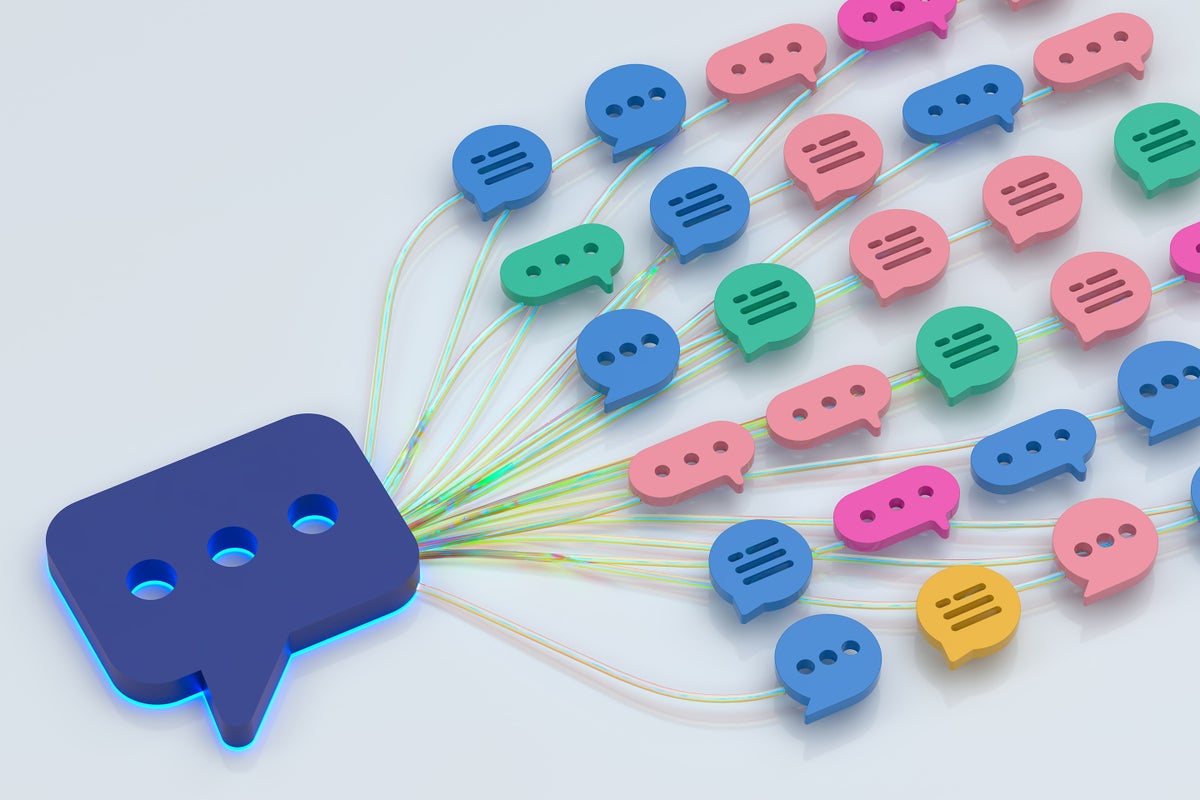
ChatGPT and the other chatbots have particular writing rules they follow, are very grammatically correct, and have a certain soulless way of communicating.
What many studies are already showing is that ChatGPT is not learning to speak like us, but we are molding our communication patterns after it.
There is a noticeable shift in article and books and podcasts and YouTube videos where people, even when not using an AI script, sound like AI.
Soon, no matter where you are in the world, whether reading an article like this one or speaking to someone at a coffee shop, it will seem as though you are talking to a chatbot.
I think we had all hoped that ChatGPT would become a super human made after our image. It turns out that it is more likely that we will become shaped by this thing we have created.
The internet has been killing language for a while now.
This is nothing new. As we have taken on the culture of internet consumption, people have been ringing alarms ad nauseam that the internet is killing the lexicon. People hardly know how to hold a conversation of true weight, length or depth.
This is not a fear-farming conspiracy. A great example of this is found in the collapse of nature-based language as we became a culture of people who stay inside and stare at the radioactive black boxes in our pockets and on our walls. It is rare to be able to use the proper words to describe the aspects of a forest, the trees and streams and the features therein. Why would you need to, after all, since you are never in the forest?
Our word choices reveal that a growing number of people are spending less time in the real world needing language to describe physical things, and instead we are evermore digital describing the ether-world.
My wife and I still quote Vine videos to each other, and now our kids say them. Every once in a while we adopt the vocabulary of a new meme. We are most certainly being formed by the podcasts we listen to and videos we watch. All of these digital inputs, consuming the language of these viral talking heads.
The real problem with most internet language is the relationship necessary for the language to take hold. There is a voice coming through the phone, and all I do as the listener is, well, listen. I do not converse. Not only am I unthinkably accepting the speakers’ language forming my own internal dictionary, I also am unlearning how to have a conversation.
In modern language production, we have become so used to simply consuming language that we have diminished our ability to participate and produce meaningful language. How can we ever solve real issues such as loneliness if we are unable to use language as a tool to our benefit?
The solution
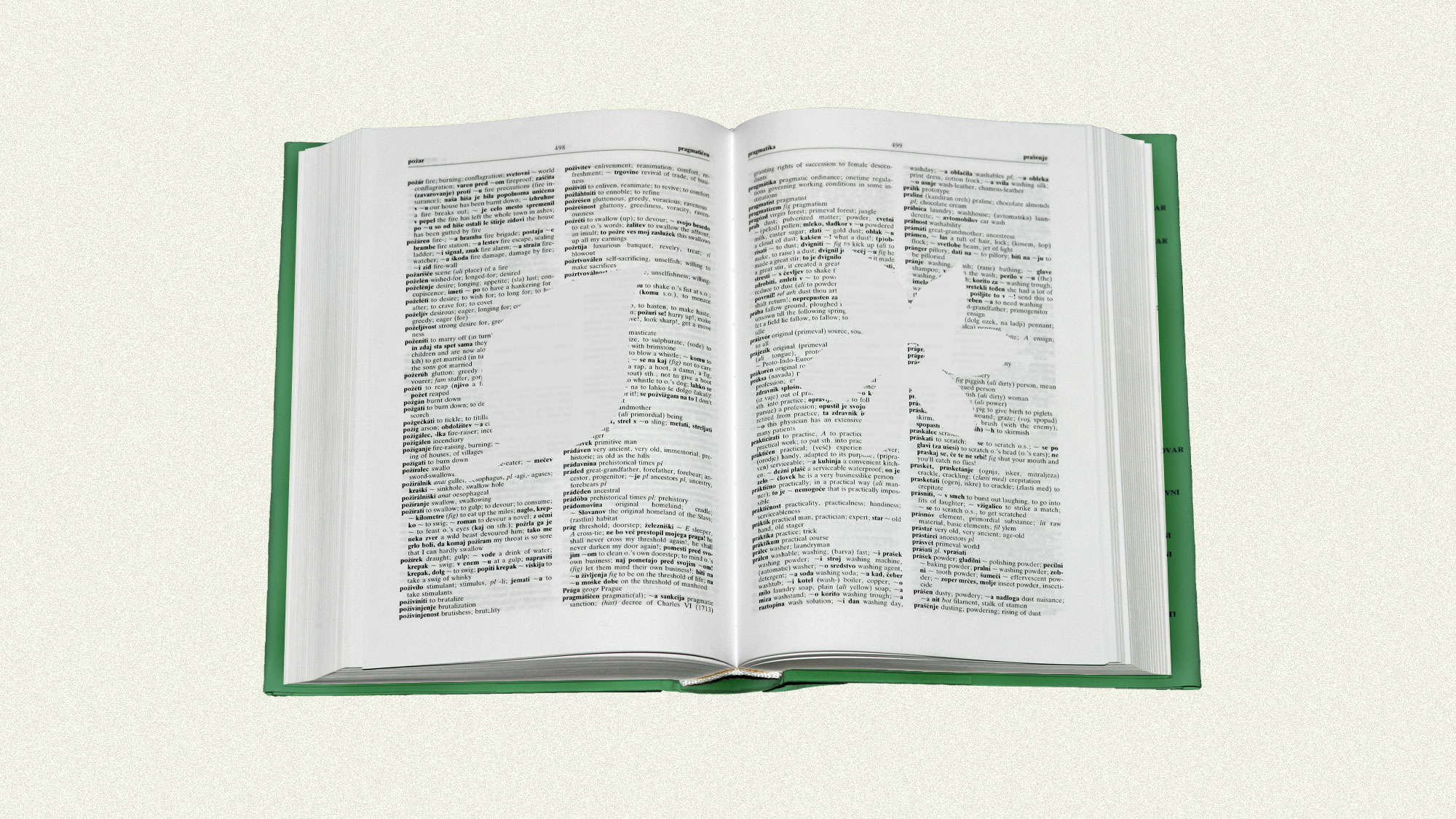
We need to read old books, watch old movies, and spend our free time talking to real people.
Old books get us out of the age of the internet and, I argue more importantly, out of the age of AI. Without knowing it, people are sounding like AI. If we want a richer form of human communication it will only come from conversing (through reading) with older, well-written individuals.
Old movies will also hold to a more human form of communication. How to rib one another. Small talk. Gestures of kindness. Falling in love. Dealing with hurt and heartbreak. Chatbots will tell you with robotic precision how to deal with these human moments where communication is paramount, but only experiencing communication in those moments helps us describe with language our own events.
Lastly, and most importantly, if we are going to preserve language it will only come through speaking with other humans. Rather than consuming another podcast, maybe this year we can commit to calling people more often. Rather than watching someone else have an interesting life through a screen, we can commit to living an interesting life, bumping into people and talking to them.
If you liked this post, or you feel like it would start a good conversation, please share this with your friends and ask them to subscribe.
It would help me a lot. Thanks for reading!
What did you think of today’s article?
New videos coming out weekly: https://youtube.com/@thejacobhayward?si=JHgwOjGP_-FwY3l0
Follow me on X for newest updates: https://x.com/thejacobhayward?s=21